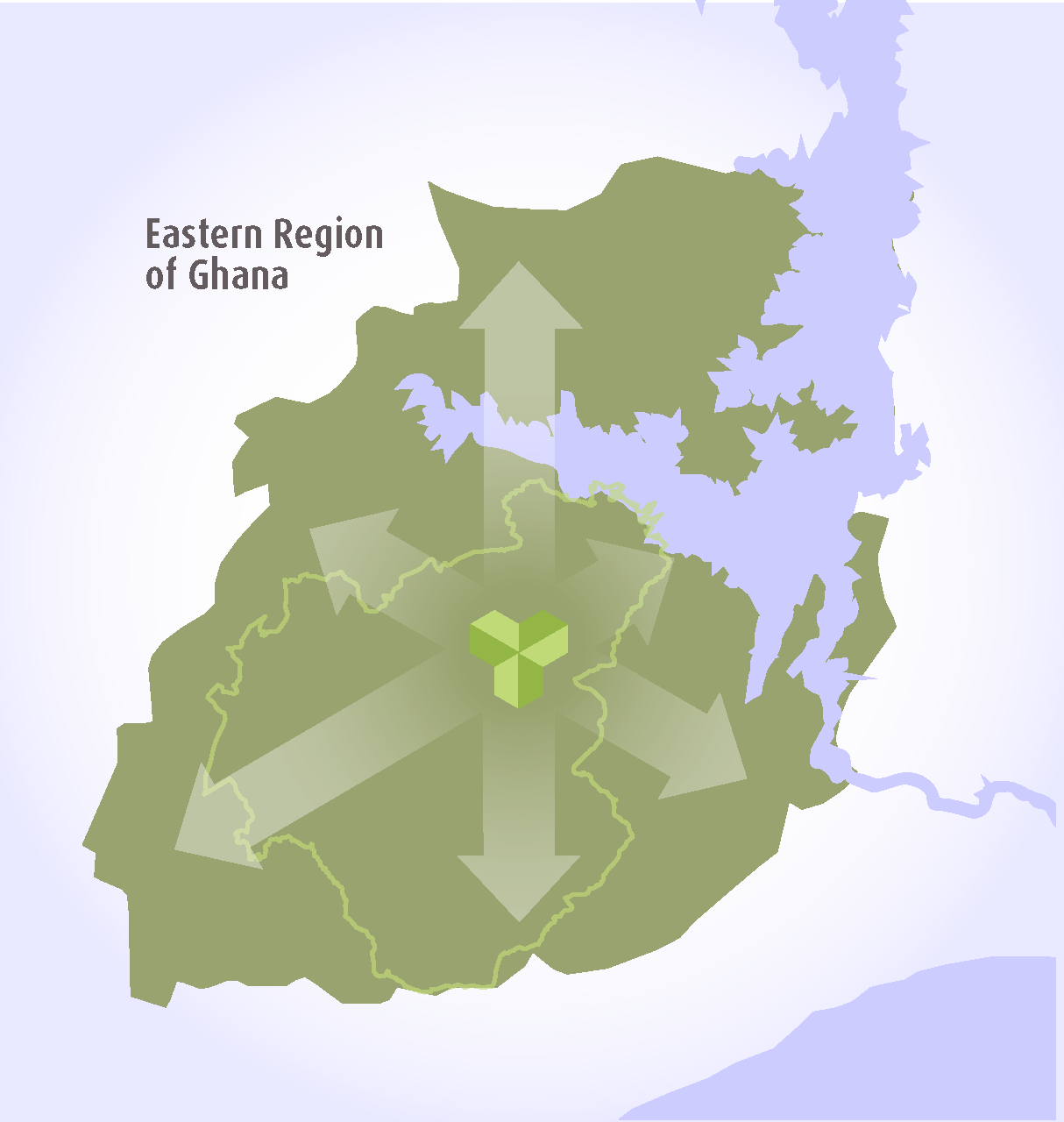
Zuza’s Convergence Approach is on the Ground in Ghana.
Our first convergence initiative. The Akyem Abuakwa Kingdom in Ghana.
Using our Qualifying Metrics, Zuza has chosen Ghana as our first country and the Akyem Abuakwa Kingdom within the Eastern Region as our first project The Eastern Region meets all our success metrics for land availability, population makeup, and other key components. Sadly, a legacy of destructive deforestation and illegal gold mining has pushed the people and ecosystem of this area to the edge. Vast areas of land, rivers and streams have been destroyed. Lack of income alternatives has exacerbated the problem.
Fortunately, we've collaborated with a willing and enthusiastic partner in the region's leadership and communities for a decade now.
When Osagyefuo Amoatia Ofori Panin, became Okyenhene, His Majesty the King of The Akyem Abuakwa Kingdom, he made a commitment to raise the standard of living for his people, but also made preservation of the environment his mission as well.
When presented with a plan that would do both, he and his team of Chiefs were eager to partner with Zuza.

Zuza/Akyem: Project Overview
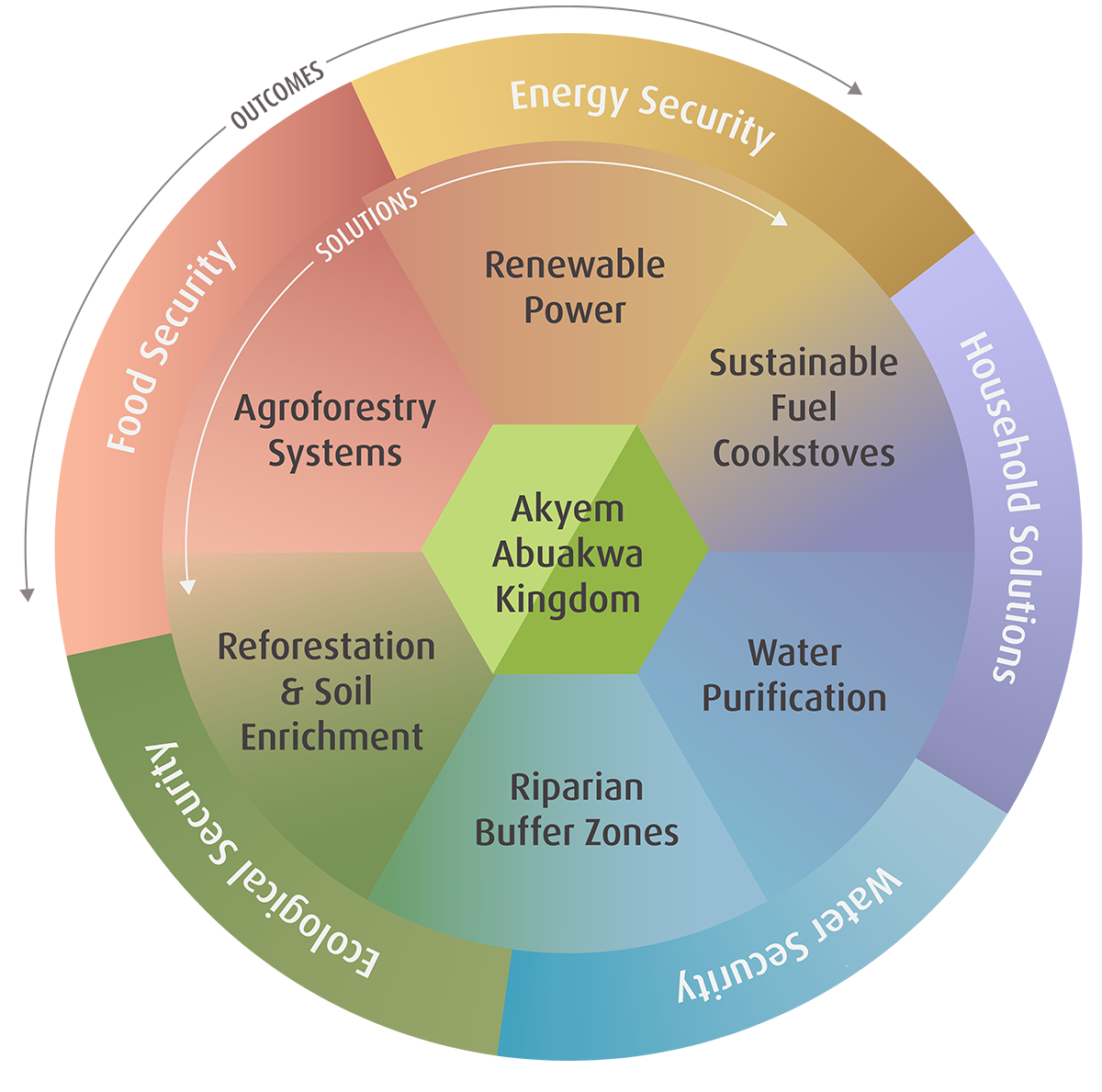
The Zuza/Akyem project will generate a holistic set of outcomes from a holistic set of solutions.
Communities in the Kingdom are surrounded by challenges that don’t fall neatly into distinct buckets — because they are inherently interconnected. That’s why “single point’ approaches seldom work for long. The community is an interdependent ecosystem like the environment around it. Since the challenges are linked, the solutions must be too.
The Zuza Development Platform brings a 360º approach to these problems by deploying overlapping solutions that reinforce and multiply the benefits of each. Providing outcomes that lift both the community and the local ecosystem — creating what we call “Perennial Prosperity.”
Phase One: Agroforestry-based Ecosystem Regeneration
Ecosystem regeneration will feed the project.
The Kingdom provided a landscape of 10,000 hectares (~25,000 acres) of land degraded by deforestation and "Galamsey", the local name for illegal gold mining.
Our integrated Nature-based Solution set is a carefully crafted combination of tactics to regenerate the soil, water and air: terraforming, soil amendment, riverbank and stream restoration, cover crops, vermiculture and pollinators that addresses ecosystem regeneration and riparian buffer zones in the accompanying diagram.
Phase One will regenerate 7,324 hectares (18,090 acres) creating a 4,324-hectare Agroforestry Food System, with cash crops like avocados, cocoa, coconuts, moringa, bananas, turmeric and ginger, all grown to strict organic standards.
We’re also creating a 3,000-hectare Reforestation system, with diverse native tree species contributing Non-Timber Food Products (NTFP) such as food, fiber and local medicinal plants. Biodiversity enhancements include ecological corridors to support the conservation of the 17,400-hectare Atewa Forest Reserve.

Actions
- Clear and terraform the land with berms, swales and irrigation ponds and ditches.
- Create 20-meter wide protective ‘riparian buffer’ zones along river/streams using carbon-fixing grasses that will provide sustainable biomass feedstock.
- Restore and continuously amend degraded soil:
- Planting nitrogen-fixing cover crops
- Mulching and composting
- Beneficial bacteria and fungi inoculants
- Apiculture (bees and other pollinators)
- Vermiculture (earthworms)
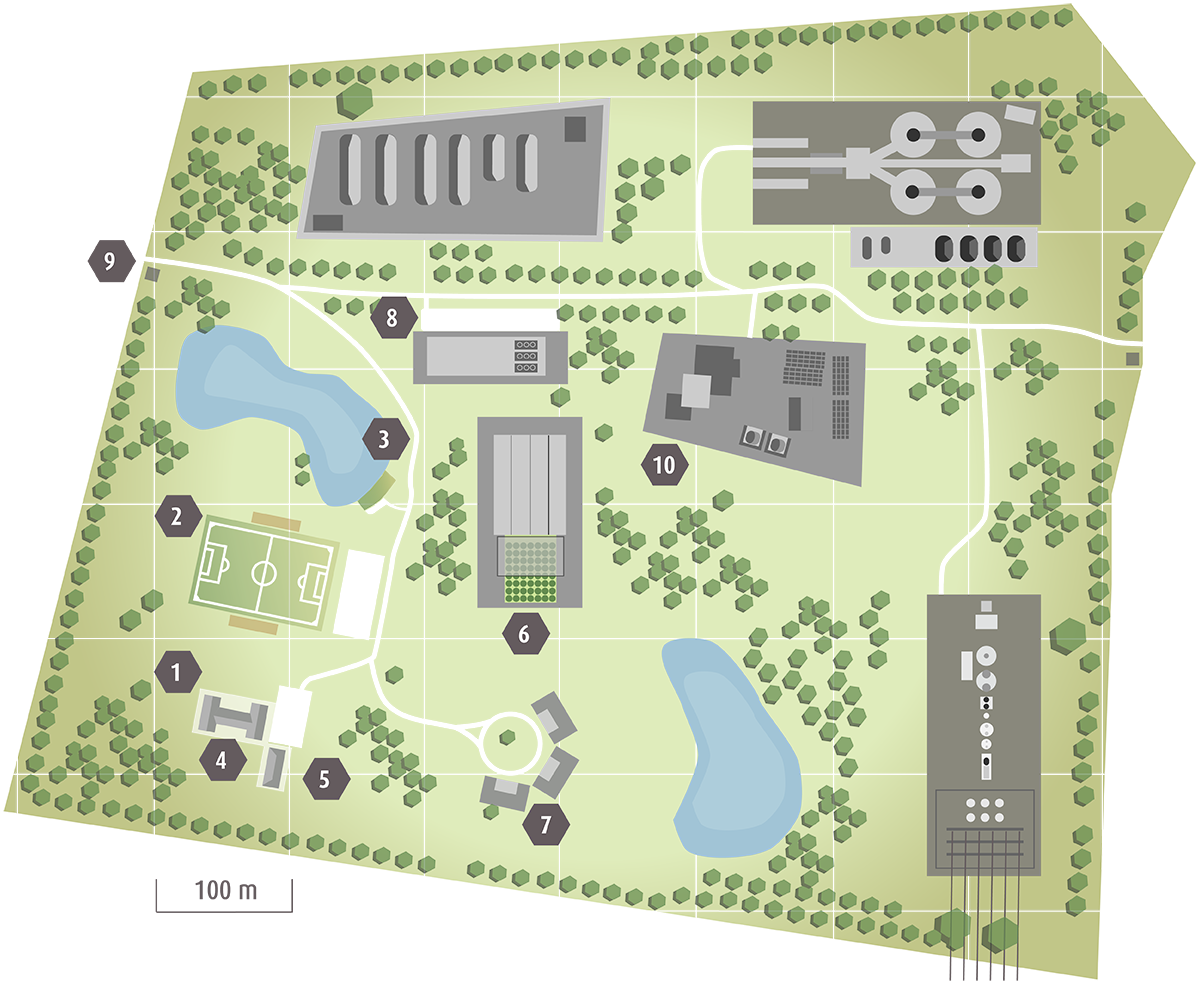
The Core of the Initiative: The Zuza/Akyem Hub
Outside the rural village of Nsutem, Zuza is building its first hub. The Zuza Hub will be the anchor campus where the community and Zuza work together to advance the portfolio of holistic mitigation solutions outlined above. The Hub will provide public recreational and social spaces to help build sustained community support as it adapts to a changing climate. As they emerge, negative emission technology facilities can be located in the industrial areas of the Hub with ready access to the grid and a major highway to the port in Tema.
Community Features:
- Community meeting spaces
- Sports fields and picnic areas
- Inside and outside social spaces
- Training and support
- Service/Repair centers for cookstoves, water purification devices, and renewable energy devices like solar panels.
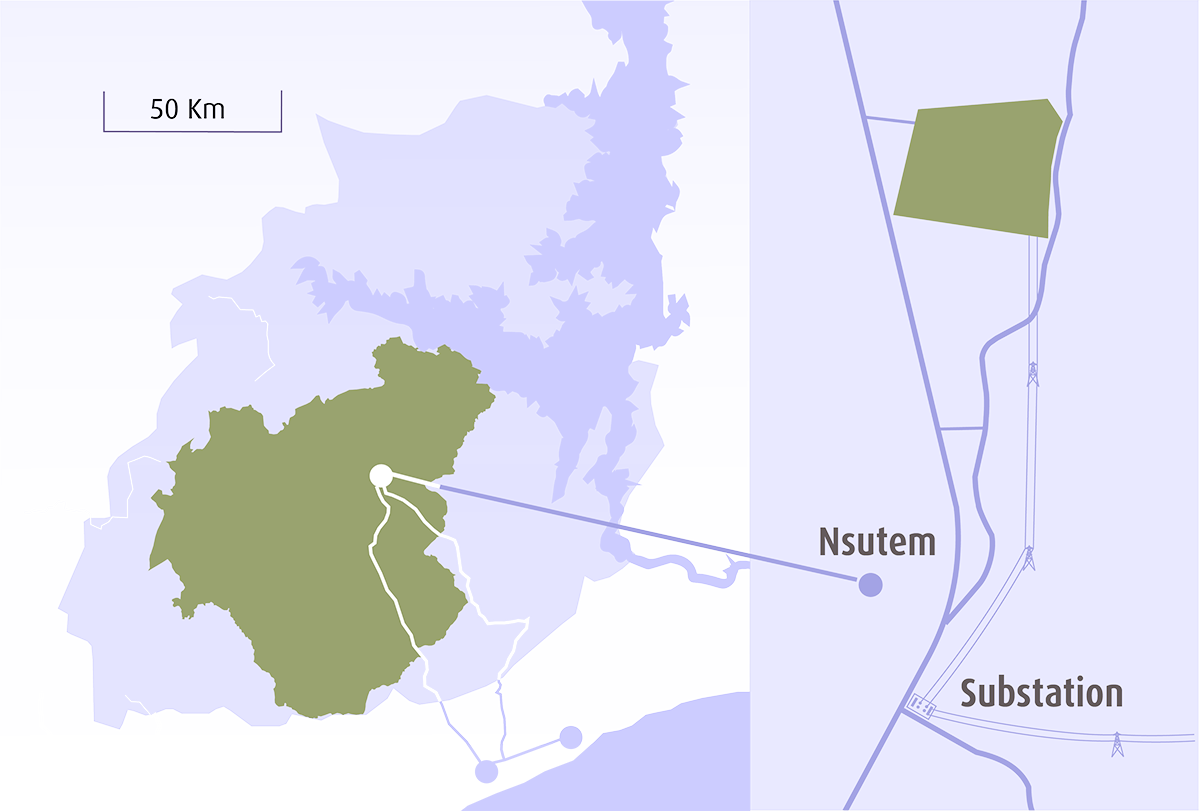
Agricultural & Industrial Facilities:
- Greenhouses for raising seedlings.
- Housing for project workers and managers
- Dry and cold or hyperbaric storage to preserve agricultural produce to reduce waste
- Direct highway access to export facilities at the port city of Tema
- Parcels allocated for Negative Emissions Technology solutions like Bioenergy Carbon Capture & Storage (BECCS) and Biomass Carbon Removal and Storage (BiCRS) solutions, or building materials and biochar, Mineralization, Enhanced Rock Weathering and other emerging carbon removal solutions.
Zuza plans to expand across the Eastern Region of Ghana over time, to positively impact 2.9 million people and restore 1.9 million hectares of land to ecological health.
What we learn with Zuza/Akyem will be refined, optimized, expanded, and repeated many times over, transforming thousands of hectares of degraded land and the communities in Ghana and beyond.
We're committed to:
- Improving the lives of 2.9 million people in the Eastern Region of Ghana
- Transform the most degraded lands within this 1.9 million-hectare region
- Providing thousands of permanent and support-related jobs, half allocated for women
- Adhering to IRIS+ standards for monitoring impact
- Addressing all 17 of the United Nations Sustainable Development Goals (UNSDGs)
- Addressing 16 of the Kunming Biodiversity targets
- When fully implemented, a plan that can potentially remove 100 million tons of CO2 over 30 years